
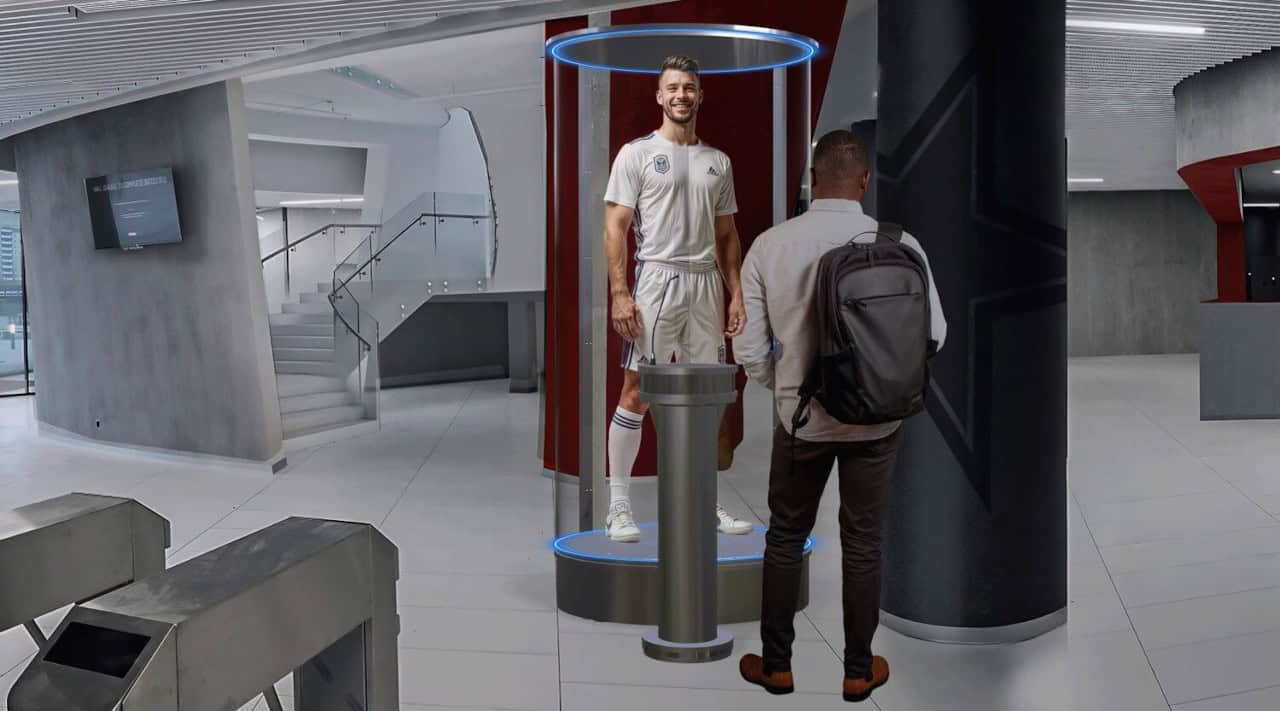
For forward-thinking sports enterprises, holography is not just a ahow—it’s a $2.1B revenue accelerator. This technology solves three executive priorities: fan monetization, sponsor differentiation, and operational innovation.
Technology Foundation
Modern holographic displays are LED systems creating 3D illusions visible to crowds without glasses or other devices. Unlike VR/AR, these require no user devices—critical for mass audiences seeking frictionless experiences.
1. Sponsorship Activations: The Premium Engagement Multiplier
Strategic Imperative: Transform passive brand exposure into immersive touchpoints that command premium pricing.
Placing a hologram featuring Lionel Messi in Champions League stadium fan zones could generate millions of social impressions while creating measurable dwell time advantages. Static displays outperform digital ads in dwell time, positioning holographic activations as the natural evolution of sports sponsorship.
Implementation Framework:
- Phase 1: Major tournament activations (World Cup, Olympics) with tier-one sponsors
- Phase 2: Stadium-permanent installations with rotating sponsor content
2. Premium Merchandising: Holographic Sales Acceleration
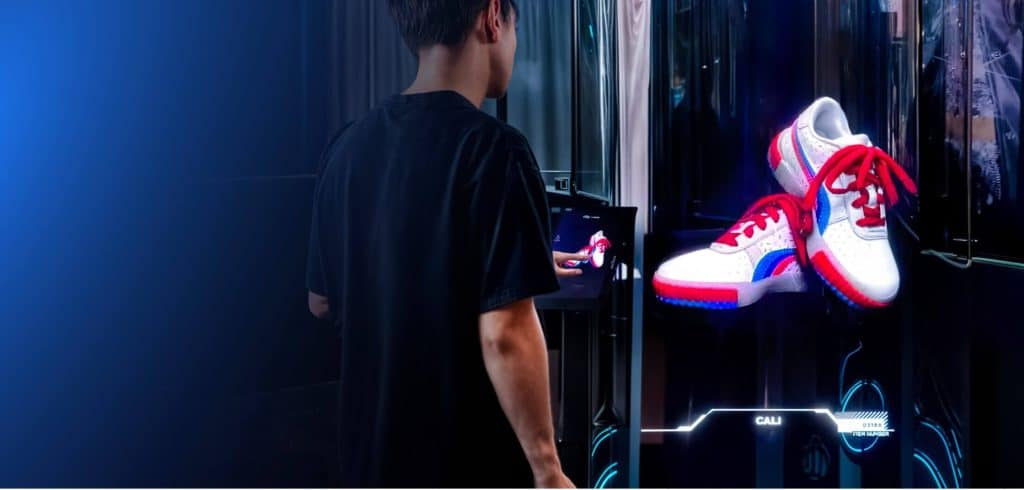
Strategic Imperative: Transform traditional merchandise displays into immersive selling experiences that drive conversion rates and average transaction values.
Revenue Multiplication Framework: Holographic displays revolutionize merchandise sales by creating experiential shopping environments. A holographic Lamine Yamal wearing the latest Barcelona jersey in stadium stores could demonstrate product features, share personalized messages, and guide purchase decisions—converting passive browsers into active buyers.
Projected Value Creation:
- Conversion Rate Impact: Interactive retail displays increase purchase intent by 34%
- Average Transaction Value: Experiential merchandising drives 22% higher spending per customer
- Dwell Time Advantage: Holographic displays retain customer attention 3x longer than traditional product presentations
Implementation Framework:
- Stadium Store Integration: Holographic athlete endorsements at point-of-purchase
- Limited Edition Launches: Virtual player appearances for exclusive merchandise releases
- Seasonal Campaigns: Holiday-themed holographic content driving gift purchases
Risk Mitigation Note: While installation costs remain substantial, the technology’s ability to simultaneously showcase multiple products and generate viral social moments justifies investment through accelerated inventory turnover.
3. Legacy Preservation: Tourism Revenue Acceleration
Strategic Angle: Holographic memorials (e.g., Pelé at Maracanã) boost stadium tourism revenue by an estimated 15%.
Iconic venues can leverage holographic recreations of legendary moments to create year-round revenue streams independent of match schedules. The technology enables authentic storytelling that transcends language barriers while generating premium ticket pricing for enhanced stadium experiences.
Investment Thesis: Holographic installations transform passive venues into active revenue generators, with projected payback periods of 18-24 months for tier-one stadiums.
4. Interactive Play Simulation: Monetizing Historical Moments
Strategic Lens: Transform iconic sports moments into repeatable revenue-generating experiences.
Revenue Multiplication Framework: Holographic recreation of legendary plays allows venues to monetize historical content year-round. Imagine fans experiencing Maradona’s Hand of God goal at Wembley, or witnessing AC Milan’s dominant 4-0 victory over Barcelona in the 1994 Champions League final through life-sized holographic simulations that place spectators inside the action.
Commercial Applications:
- Stadium Tours Enhanced: Premium ticketing for Greatest Moments holographic experiences
- Corporate Hospitality: Exclusive pre-match entertainment featuring club legends in holographic form
- Educational Content: Interactive tactical breakdowns showing how historic plays developed
Projected Value Creation:
- Premium Experience Pricing: 40-60% uplift over standard stadium tours (comparable to VIP experiences)
- Repeat Visitation: Historical content library drives multiple visits per customer
- Merchandising Synergy: Holographic moments trigger nostalgia-driven merchandise purchases
Implementation Framework:
- Content Acquisition: Secure broadcast rights for historic matches and player likeness agreements
- Venue Integration: Install holographic display systems in dedicated experience zones
- Seasonal Programming: Rotate historic moments based on anniversaries and club milestones
Risk Mitigation Note: While content licensing requires an initial investment, the evergreen nature of legendary plays ensures sustained revenue generation across multiple seasons.
5. Fan Experience Innovation: The Scalability Advantage
Strategic Imperative: Create differentiated experiences that justify premium pricing while building social media amplification.
Holographic player appearances at multiple venues simultaneously solve the scarcity problem inherent in traditional athlete marketing. A Chelsea player can theoretically appear at ten global fan events simultaneously, maximizing commercial value while minimizing travel costs and schedule conflicts.
Revenue Multiplication Potential:
- Direct: Premium ticketing for holographic experiences
- Indirect: Increased merchandise sales during enhanced fan interactions
- Compound: Social media virality driving global brand awareness
Boardroom Reality: The question isn’t whether holography will transform sports business—it’s whether your organization will lead or follow the adoption curve.
Engaging with Holographic Displays
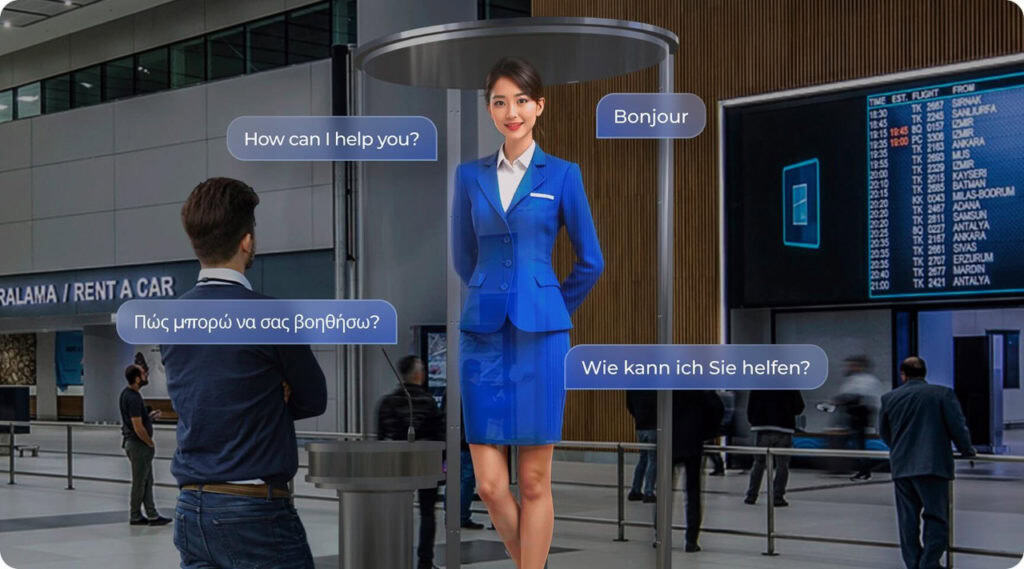
The convergence of decreasing hardware costs and increasing fan experience expectations creates a strategic window for holographic adoption. Organizations that establish holographic capabilities now will command premium positioning when the technology reaches mainstream adoption.
To audit holography’s feasibility for your assets:
The transformation from show to strategic advantage begins with the understanding that holographic displays are not about technology, but about reimagining the economics of fan engagement.